


We hear the same question often: we are installing PPF, so how much of the car should be covered? The honest answer is that the right choice depends on how the car is used, what it is exposed to, and what the owner wants from the finish. Coverage should follow real risk, not a default package.
For some cars, full front PPF is the sensible place to start. For others, full body PPF makes more sense because the car sees wider exposure, the finish matters more across every panel, or the owner plans to keep it for years. The point is not to treat one option as automatically better. It is to match the film coverage to the way the vehicle is driven and cared for.
In Johannesburg, that decision usually comes down to road use, parking habits, paint condition, panel complexity, and the owner’s expectation for how uniform the finish should look after installation. We measure first, inspect the paint, and explain the trade-offs before recommending a coverage direction.
What full front and full body coverage mean in practice
Full front PPF generally focuses on the areas that take the first impact. That usually includes the front bumper, bonnet, front guards, mirrors, and other leading surfaces that meet debris first. These are the panels most exposed to stone chips, airborne grit, insect impact, and the wear that builds up on long drives.
Full body PPF extends protection across the complete vehicle. That means more panels are covered, including side sections and rearward areas that may be exposed to contact, road film, parking abrasions, and repeated handling over time. In practical terms, the question is not only where the film can be installed, but where the car is most likely to need it.
Where damage usually starts on Johannesburg roads
On Johannesburg roads, the first marks often start where the car meets the road flow directly. Highway driving increases exposure to loose debris, grit, and repeated high-speed impact on the front end. Even careful drivers can pick up chips where traffic is moving at speed and the car has no way to avoid what is already in the lane.
Urban driving creates a different risk pattern. Tight parking, narrow clearance, shopping centre traffic, repeated door openings, and low-speed contact around mirrors, guards, and rear quarters can make the protection picture broader than the front alone. A car that spends its life in the city may face less airborne impact than a long-distance commuter, but more chance of small contact marks in crowded spaces.
Wheel-arch spray, road film, and grime also affect how a car ages visually. They do not always create the dramatic chip damage owners expect, but they can build a dull, worn look on lower panels and along the sides. That is why we do not judge coverage only by the bonnet and bumper. We consider where the vehicle will actually pick up wear.
For car PPF Johannesburg decisions, this matters because the same vehicle can face very different exposure depending on its route, parking situation, and weekly use. A daily commuter with regular highway travel has a different risk map from a weekend car that is mostly stored, cleaned, and taken out for shorter drives.
Daily driver or collector car: what changes the recommendation
A daily driver usually needs the most honest assessment of the front end, because that is where the road delivers the first and most repeated impact. If the car is used often, driven in traffic, and exposed to mixed road conditions, full front PPF is often the starting point for sensible protection. It addresses the zones that take the most immediate abuse without covering panels that may never face the same level of wear.
That does not mean full body PPF is unnecessary. Some daily drivers benefit from broader coverage when the car is a high-value finish, has sensitive paint, or spends a lot of time in dense urban conditions. But we only recommend that when the use case supports it. More film is not a substitute for a real need.
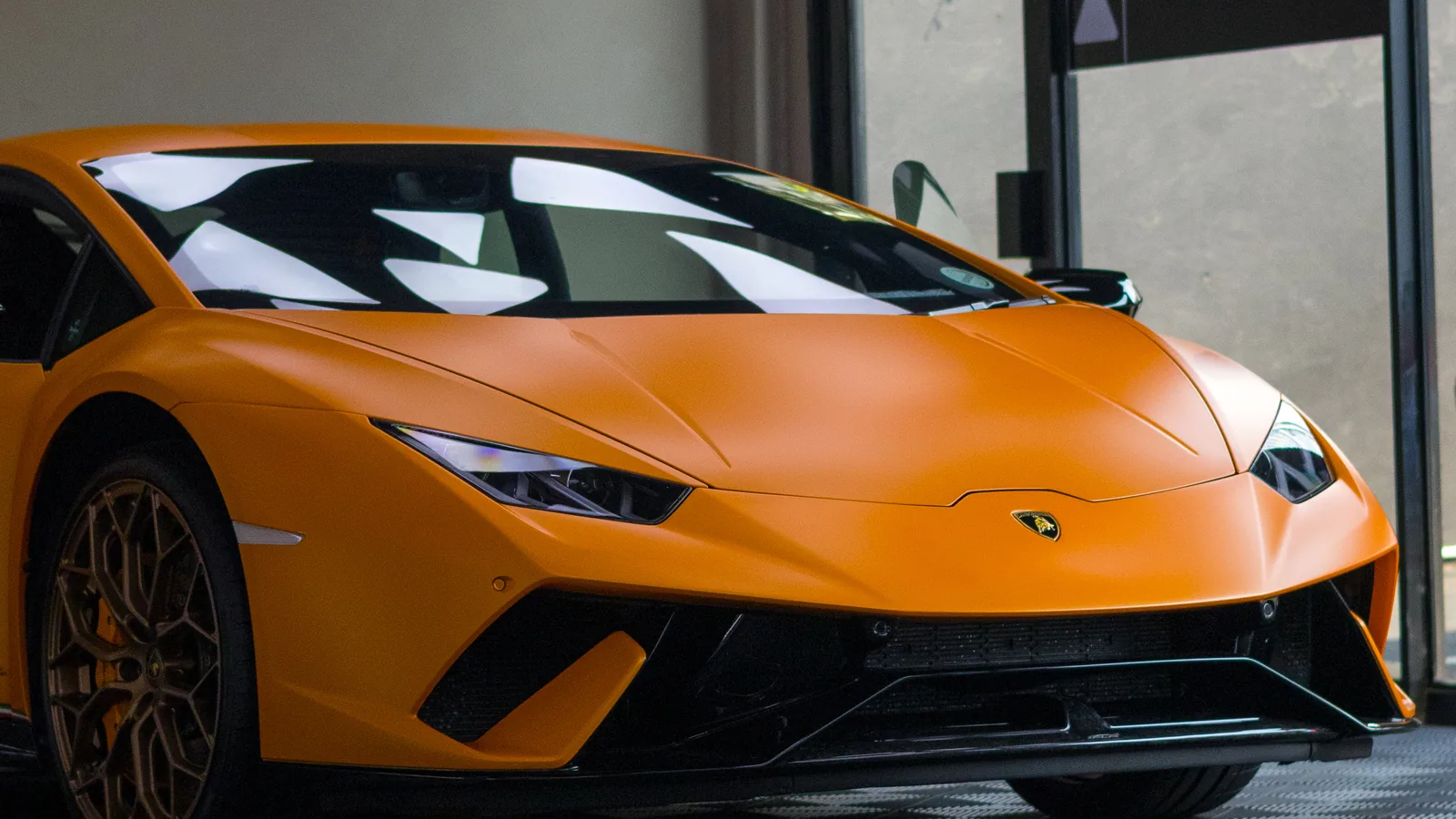
Collector cars sit in a different category. Some are driven only occasionally and see limited exposure, which can make full front protection enough for the owner’s actual use. Others are collector cars in name but still used regularly for events, longer trips, or showcase driving, and those cars may need more than front-only coverage. The question is never the label on the car. It is the life the car is living.
Ownership horizon also matters. A car that will be kept for many years can justify a wider coverage decision if the owner wants the finish protected across more of the bodywork. A car that may be sold sooner may not need full-body film if the highest-risk panels are already covered and the rest of the car is maintained well. The right answer changes with the plan for the vehicle.
How finish expectations affect the choice
PPF is not only about protection. It also changes how the surface looks and how the transitions are managed. On a gloss paint finish, owners often want the film to sit cleanly and evenly so the car still reads as one continuous surface. On matte or factory-style finishes, the appearance question becomes more sensitive because the film must suit the original texture and visual effect.
That is one reason full body PPF is not always the most natural choice. More coverage means more edges, more joins, more panel transitions, and more places where workmanship matters. A good installation should be neat, but even a well-executed job needs correct planning, especially on complex shapes and sharp creases. Wider coverage increases the number of places where detail becomes visible.
Owners should also think about how much visual change they are comfortable with. Some want the front protected and the rest of the vehicle to remain as originally finished. Others want consistent coverage across the full car so the protection is uniform from every angle. Neither preference is wrong. The right choice is the one that matches the car’s look and the owner’s tolerance for visible transitions.
If a finish is especially important, we inspect the paint closely before we suggest any coverage. Existing marks, contamination, previous repair work, and panel irregularities all affect how the film will sit and how the final result will look. The better the assessment, the more accurate the recommendation.
When full body PPF is justified, and when it is not
Full body PPF can be justified when the car sees broader exposure, when the finish must remain consistent across every panel, or when the owner wants the highest level of surface coverage within the limits of the material. It can also make sense where a vehicle has complex use patterns that go beyond simple highway chip protection.
It is not automatically justified just because the car is expensive. High value alone does not decide the coverage. A well-kept luxury car that is only used occasionally may not need the same film footprint as a car that lives in traffic, on open roads, and in crowded parking environments. The use pattern matters more than the badge.
Full front PPF is often the more rational choice when the main concern is impact from the road, and when the owner wants meaningful protection without covering areas that do not face the same level of exposure. It protects the zones that take the first hits and keeps the installation focused where the risk is highest.
Full body PPF becomes more appropriate when the owner wants a broader protective strategy, accepts the additional workmanship involved, and understands that more coverage brings more installation decisions. It is a stronger commitment, not a default upgrade.
- Choose full front PPF when the main risk is debris, chip damage, and long-distance road exposure.
- Consider extended front coverage when the side exposure is also significant, but full-body film is not necessary.
- Choose full body PPF when the car’s use, finish expectations, and ownership plan all support wider protection.
What a proper inspection should include before you quote coverage
A proper PPF recommendation starts with inspection, not with a package. We measure the condition of the paint, check how clean and stable the surface is, and look at where the vehicle is most likely to take impact. We also assess panel shape, edge complexity, and the kinds of transitions that will affect the installation.
That matters because the same coverage plan does not suit every car. A bonnet with simple geometry is not the same as a front end with complex contours and tight edges. A body with existing marks may need preparation before any film is applied. A car with delicate finish expectations may require a more cautious coverage plan than one that simply needs practical front-end defence.
We also explain the limits clearly. PPF does not remove the need for proper washing. It does not make a car immune to contact. It does not turn every panel into a no-risk surface. It is a protection layer, and its value depends on the installation quality, the chosen coverage, and the way the car is maintained afterwards.
If the edge finish is poor, if the transitions are messy, or if the surface was not properly prepared, problems tend to show later. That is why inspection under appropriate lighting matters before and after installation. Good work should look deliberate, even when the film itself is meant to be discreet.
Choose coverage around how the car is actually driven
When owners ask us to compare full front PPF vs full body PPF, we bring the question back to use. Where does the car spend its time? What kind of exposure does it face? How important is a uniform finish? How long will the owner keep it? Those answers usually point to the right level of coverage more clearly than any preset package can.
For many cars, full front PPF is the right response to the highest-risk zones. For others, broader coverage makes sense because the vehicle sees more than front-end road impact. Our job is to measure first, explain the risks honestly, and recommend coverage that fits the car rather than pushing more film than the situation needs.
For car PPF Johannesburg enquiries, Executive Details can inspect the vehicle, assess the paint, and discuss the best coverage path for the way it is actually driven.
Book a PPF inspection
If you want to compare full-front PPF and full-body PPF for your vehicle, arrange an inspection at EXD and we will assess the car's condition, exposure, and coverage needs before quoting the work.
Find the right protection for your vehicle
Discuss your driving needs, paint condition and PPF coverage with Executive Details.
Make a booking