A ceramic coating is not a replacement for paint protection film. It will not stop stone chips or deep scratches. It is a thin, chemically bonded layer on a properly prepared surface, and it makes the car easier to wash. Water, dirt and many contaminants sit on the coating rather than on the clear coat. On paint we use GYEON and Labocosmetica. On XPEL film we use XPEL Fusion Plus, the coating XPEL makes for its own film. We only apply a coating after the paint has been inspected and, where needed, corrected. We do not seal a compromised finish.


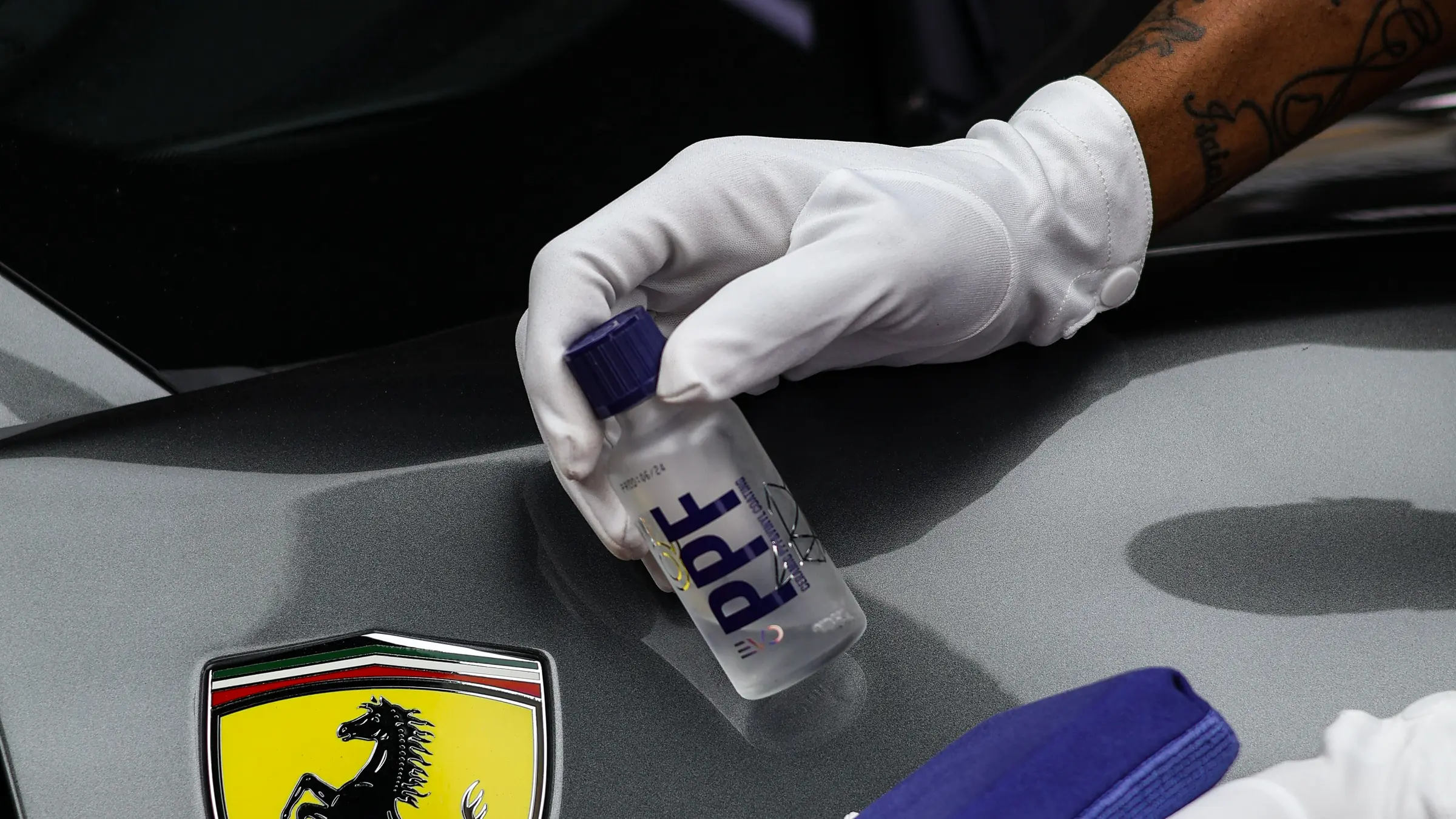
Ceramic Coating in Hyde Park, Johannesburg
Ceramic coating for luxury and performance vehicles at EXD in Hyde Park, Johannesburg.
How a Ceramic Coating Works
The limits come first: a coating is not paint protection film, and it will not stop stone chips or deep scratches. What follows is what it can do, once the paint is prepared.
Chemical Bonding
Unlike wax or sealant which sit on top of the paint, a ceramic coating bonds at the molecular level to your clear coat. It becomes part of the surface rather than a layer on top of it.
Hydrophobic Surface
Water beads and rolls off, taking loose dirt, brake dust and road grime with it. The car stays cleaner between washes, and a careful hand wash takes less time.
UV and Oxidation Protection
Johannesburg's intense UV exposure is one of the most damaging factors for automotive paint. A ceramic coating creates a barrier against UV rays that would otherwise cause fading, oxidation, and paint chalking over time.
Chemical and Contaminant Resistance
Bird droppings, bug acids, industrial fallout, tree sap, and road salt are all highly acidic and damaging to bare clear coat. A properly applied coating resists these contaminants and prevents etching.
Enhanced Gloss and Depth
A carefully applied coating can add depth and clarity to a prepared finish, beyond what a wax or sealant typically gives.
The Coating is Only as Good as the Preparation
This is where most ceramic coating work goes wrong. Sealing contaminated or defective paint underneath a coating locks those imperfections in permanently. At EXD, every coating application begins with a multi-stage preparation process that we will not compromise on.
Step 1: Full Decontamination Wash
Every trace of road grime, wax, sealant, iron contamination, and industrial fallout is removed using a staged wash, iron decontamination spray, and clay bar treatment.
Step 2: Paint Assessment
Under controlled lighting we inspect every panel for swirl marks, scratches, water spots, and oxidation. We will advise you honestly on what we find and recommend paint correction if required before the coating is applied.
Step 3: Paint Correction (Where Required)
If your paint has existing defects, our technicians use professional machine polishing to restore it to the standard required for coating. We do not apply ceramic coating over compromised paint.
Step 4: Surface Preparation
A final wipe-down with a panel wipe removes any polish residue and leaves a clean, oil-free surface for the coating to bond to.
What a Coating Does, and Does Not Do
A ceramic coating can be a sound step for the long-term finish, but only if you understand what it does and what it does not do.
What it IS: A chemical bond to your clear coat. A surface more resistant to UV, chemicals and contaminants. A simpler wash routine. Added gloss and depth on a prepared finish. A surface that sheds water, dirt and road grime.
What it IS NOT: A replacement for paint protection film. Physical impact protection against stone chips or deep scratches. A maintenance-free solution. A guarantee against water spots in hard-water areas. Something that can be applied over uncorrected or contaminated paint and still perform properly.

Investment
The figure for a ceramic coating at EXD is confirmed after a paint inspection of your car. It depends on the condition of the paint, the size of the vehicle, and the coating selected. Arrange an inspection and we will confirm the work and the figure.
Looking After the Coating
A properly applied and maintained ceramic coating performs best when matched to the vehicle and how it is used. Product choice, exposure and wash habits all affect the finish. We will go through the aftercare process with you at handover.
Key maintenance points:
• Hand wash only using pH-neutral shampoo. No automatic car washes.
• Do not allow bird droppings, bug splatter, or tree sap to sit on the surface. Remove promptly.
• Use a ceramic-safe detailer spray between washes to maintain the hydrophobic properties.
• Annual inspection and maintenance top-up recommended to maintain coating performance.
How to Choose a Ceramic Coating Studio in Johannesburg
Ask any studio, including EXD, the same five questions before you book.
1. Will they inspect the paint first? A coating should only go on after the paint has been checked under proper lighting and corrected where needed. At EXD, every car is inspected at our Hyde Park studio before we confirm the coating or the quote.
2. Which coating, and why? A good studio names the product and explains why it suits your paint. We use GYEON or Labocosmetica on paint, chosen after the inspection, and XPEL Fusion Plus on XPEL film.
3. Where will the car be coated? A coating needs a clean, controlled space with good lighting to go on evenly and cure properly. Ask to see where your car will be worked on.
4. What will they not promise? Be wary of fixed lifespan or chip-protection claims. A coating does not stop stone chips. If you want impact protection, ask about paint protection film first.
5. What happens after handover? Ask what aftercare you will get and how the coating will be looked after at maintenance washes.
FAQ
Arrange a Coating Inspection
WhatsApp +27 81 063 8786 to arrange an inspection at our Hyde Park studio. We will assess the paint and recommend the right coating.