
.png)

Customisation works best when it feels deliberate. A luxury or performance car should look more personal after the work, not more confused. That is the line we keep in mind in Craighall. We work with Johannesburg owners who want their cars to stand apart without losing the character they valued from the start. In practice, that means treating luxury-car customisation in Johannesburg as a question of balance, not accumulation.
We see the same pattern often. An owner wants the car to feel newer, sharper or more individual, but also wants it to still feel like their car when they walk up to it in a parking bay. That is a useful instinct. Once changes start fighting the original shape, the result can look busy rather than considered. A strong build has a clear idea behind it, and every decision supports that idea. That is the difference between personalisation and random modification.
At Executive Details, our car-culture view is simple: a car does not need to look like everyone else’s to work, but it does need to look like it belongs to itself. That is especially true for luxury cars and performance cars, where the lines, finishes and proportions already do a lot of the visual work. Good vehicle customisation respects that starting point.
Start luxury car customisation with the feeling you want
Before any change is chosen, we think about what the owner wants the car to feel like. Not just the colour, and not just the feature list. The real decision is usually emotional and practical at the same time. Does the car need to feel more refined, more assertive, more modern, or simply more personal? A weekend car may tolerate a bolder visual direction. A daily vehicle may need something cleaner, quieter and easier to live with. Those are different answers, and they should lead to different choices.
That is why the first conversation about vehicle customisation in Johannesburg should not begin with a shopping list. It should begin with use. How the car is driven matters. So does where it is seen, how often it is cleaned, and how much visual attention the owner wants to invite. A finish that suits a low-key executive look may not suit a more expressive performance build. The car’s purpose should narrow the options, not expand them endlessly.
We also encourage owners to think in terms of mood. Some vehicles suit a calm, cohesive look that feels clean at a glance. Others can carry stronger contrast and still look right. The key is that the direction should be intentional. If the owner wants subtlety, the work should not suddenly become loud. If the brief is confident and more visible, that confidence should be carried consistently across the car, not introduced in isolated pieces that do not speak to each other. That is how the car keeps its identity instead of becoming a collage.
In our view, this is where personalisation becomes useful. The aim is not to copy a trend and call it a plan. The aim is to decide what the vehicle should say about its owner, then choose changes that support that message. When that decision is clear, car customisation starts to feel coherent rather than improvised.
Treat vinyl colour change as a design decision
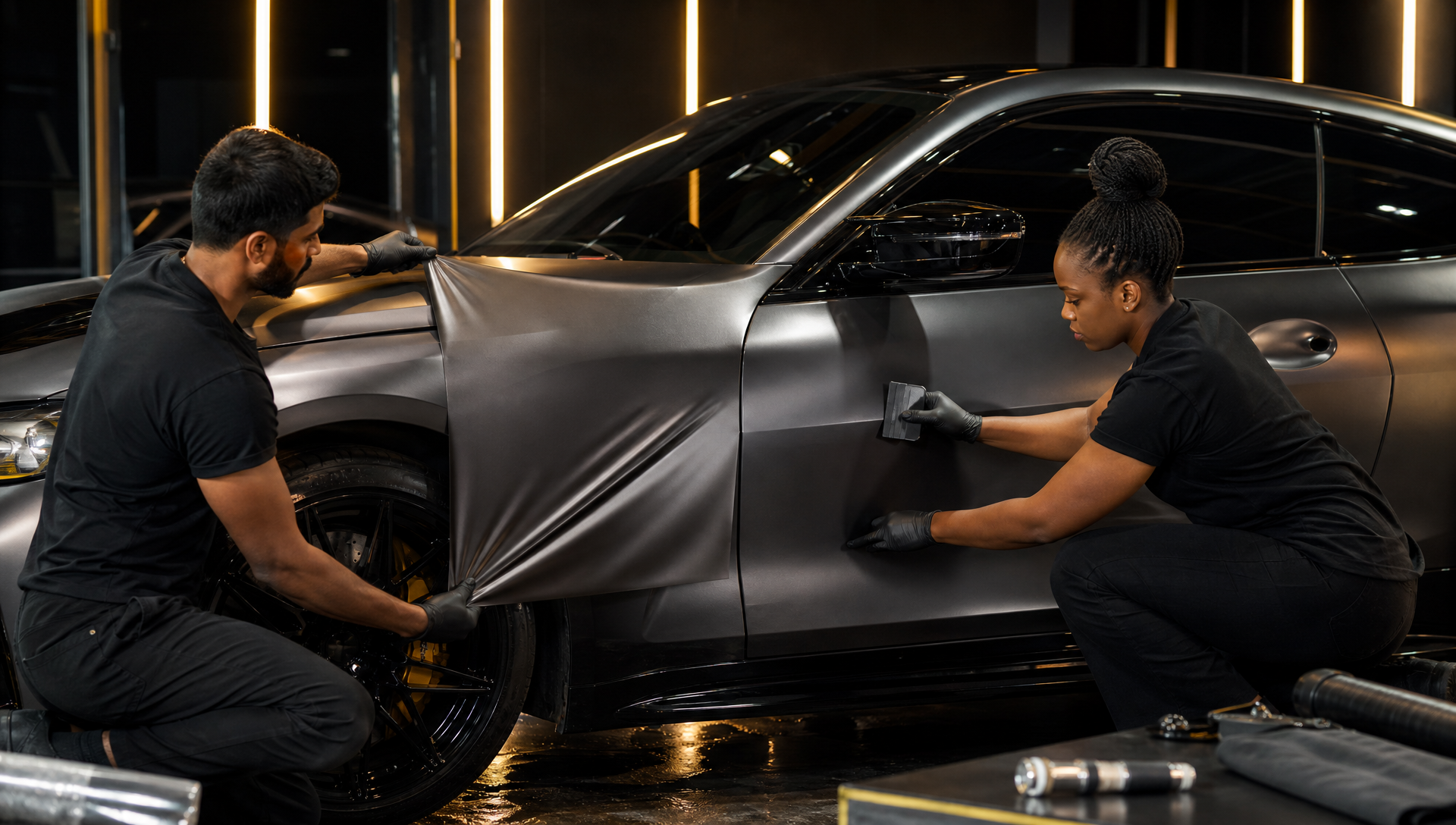
We treat a vinyl colour change as one of the most important decisions in the whole look. Colour sets the direction. It affects how the body lines read, how the trim sits against the surface, and whether the car looks calm or restless. If the colour choice does not suit the shape, even a neat installation can still feel off.
That is why vinyl colour change should not be chosen in isolation. It should be judged against the vehicle’s existing design language. Some cars already carry strong lines and need a finish that supports them. Others are smoother and can take a richer contrast. Either way, the wrap or colour change should make the body look more resolved, not more fragmented. A good choice should make the shape easier to read, not harder.
This is where body customisation and colour planning meet. If the colour direction is aggressive, the rest of the visual treatment should usually stay controlled. If the colour is understated, other details may need to do less as well. The goal is a single story, not several competing ones. We see this as part of coherent body customisation: one decision sets the tone, and the next decisions either support it or weaken it.
That same logic matters in Johannesburg, where owners often want a vehicle that stands out without looking overworked. In Craighall and across the city, we often find that the strongest builds are not the most complicated. They are the ones where the colour, finish and shape all point in the same direction.
Use the together test before adding more changes
When owners ask whether different changes will work together, we use a simple test. The question is not whether each item is interesting on its own. The question is whether each change makes the car look more like the version of itself the owner actually wants. If the answer is no, the part probably does not belong yet.
First, check the colour direction. Does it suit the vehicle’s proportions and character? Second, check the contrast level. Too much contrast can break the visual flow, while too little can leave the car looking unfinished. Third, check the relationship between the new finish and the original surfaces that remain visible. A strong design usually has a reason for what it keeps and what it changes. Nothing should feel accidental.
Then look at line flow. Luxury and performance cars already have built-in visual rhythm. A good customisation plan follows that rhythm instead of interrupting it. That is why we do not like disconnected decisions. One bold change can work. Several unrelated ones usually do not. Once a car starts losing its shape language, the overall effect becomes less premium, even if each part was individually chosen with care.
There is also a useful sanity check. Ask whether the vehicle would still make sense if one element were removed. If the answer is no, the build may be leaning too hard on a single feature. Cohesive work should remain coherent even when viewed quickly from across a street or car park. That is often the real test of good body customisation: it reads clearly before it reads loudly.
We also think about whether the car still feels like itself from different angles. A front view, side profile and rear three-quarter view should all tell the same story. If one angle looks restrained and another looks overloaded, the plan needs another look. That is a practical way to judge whether the choices belong together or whether they are simply sharing the same vehicle.

Where restraint beats over-customising
It is easy to assume that more changes mean a stronger result. Usually, the opposite happens. Too many unrelated choices can flatten the car’s identity, especially when the base vehicle already has a strong design. At that point, restraint is not a lack of ambition. It is judgement.
Sometimes the best move is to leave a detail alone because it already works with the vehicle’s shape. Sometimes it is wiser to stop after the main visual change rather than keep adding pieces that do not improve the story. A clean build can feel more expensive and more considered than a busy one. That is true for luxury cars, and it is true for performance cars that need to look purposeful rather than decorated.
We also keep an eye on proportion. A visual change can look fine in isolation and still be too much for the car as a whole. That is where experience matters. At Executive Details, our view is shaped by car culture, but also by the simple idea that the finished car should still feel owned, not assembled. If a change starts to overpower the vehicle, it is probably too far.
The simplest version is this: the goal is not to make the car look like it lost an argument with a catalogue. It should look like the owner had a clear idea and followed it through.
Restraint also helps the car age better visually. Trends move quickly, but a coherent direction tends to hold up because it was based on the vehicle itself rather than on whatever looked loud that month. That matters when the owner wants the car to feel personal, not temporary.
Bring the right information to the consult
If you want the result to feel coherent, come ready to talk about the car as a whole. Bring references that show the kind of mood you want, not just isolated parts you like. One image may show a colour direction you prefer. Another may show a level of contrast or finish that suits your taste. That is more useful than a list of disconnected ideas.
It also helps to be clear about use. Tell us whether the vehicle is a daily driver, a weekend car or something you want to present more formally. That changes how we think about the plan. A car used every day may need a cleaner, more robust direction. A car used less often may allow a more expressive approach. We can only make good recommendations when the intended use is clear.
Be ready to talk about what matters most to you. Some owners care most about the first impression. Others care about subtle distinction. Some want the car to look more modern, while others want it to feel sharper without losing refinement. Those priorities matter because they shape the order of decisions. With the right brief, luxury-car customisation becomes a focused design process rather than an open-ended one.
It is also worth mentioning any limits up front. If there are surfaces you want to protect, finishes you want to avoid, or details that should remain visually quiet, say so early. That gives us a clearer framework for judging what belongs in the plan and what should wait. Good planning saves time, but more importantly, it protects the logic of the finished look.
If you are unsure where the line should be, that is useful too. The right customisation conversation is often about narrowing choices, not multiplying them. That is how we approach vinyl colour change and broader body customisation at Executive Details in Craighall, serving Johannesburg owners who want personalisation with control.
Discuss the intended look before choosing what belongs together
Before you commit to any change, discuss the look you want and how you will use the vehicle. That is the simplest way to decide which ideas belong together and which ones should wait. If you want to explore our customisation and vinyl colour change work, we can help you plan the next step. When you are ready, use the site’s contact and booking destination to start the conversation.