


PPF installation quality is usually judged too late. Owners notice it when an edge starts to lift, when contamination is trapped under the film, or when seams and cut lines begin to show more than they should. By then, the decision has already been made. The better approach is to inspect workmanship before you collect the car and before the film has a chance to prove its weakest points.
A good PPF installation does not need to disappear from every angle on every panel. That is not a realistic promise on complex shapes, tight trim integration, or sensor-heavy sections. What it should do is stay controlled, neat and consistent. At Executive Details, the standard is inspection-led. We do not guess. We measure first. That matters because the quality difference is often visible in the details that stay hard to notice once the car is back in use.
If you are comparing installers for luxury vehicles or any car where original condition matters, look closely at the work itself: how the film was prepared, how the panels were measured, how edges were finished, and how the installer explains unavoidable limits. Those are the clues that tell you whether the result will age well.
7 things a good PPF installation should make hard to notice
Each of these checks answers the same question: what should you see, why does it matter, what do we check, and what should you ask the installer before you approve the job?
1. Trapped contamination
What good looks like: a clean surface under the film, with no obvious dust nibs, specks or embedded debris distracting the eye. Why it matters: trapped contamination is one of the clearest signs of rushed preparation, and it can remain visible for the life of the film. What we check: panel cleanliness, working area control and the finish after placement, especially on dark paint where contamination shows up quickly. What to ask: how do you control dust and contamination before the film is laid, and how do you inspect each panel before final placement?
2. Panel measurement and alignment
What good looks like: film that sits square to the panel, follows the body line naturally and does not look pulled off-centre when you stand back. Why it matters: alignment affects both appearance and durability. A film that is slightly out can create visual tension, uneven edges or stress points near curves. What we check: the panel shape first, then the film layout, then the position of the finished edges against the car’s original lines. What to ask: do you measure first, and how do you confirm alignment before final application?
3. Seam logic
What good looks like: seams that are used only where they make sense, placed with purpose and kept as discreet as the panel allows. Why it matters: PPF seams can be necessary on some shapes, but poor seam logic makes the installation look patched rather than planned. It can also affect how the film ages if the seam sits where dirt, washing or movement will stress it. What we check: the seam location, the panel relationship and whether the design choice supports long-term appearance. What to ask: where will seams be used, and why were those locations chosen?
4. Paint protection film edges
What good looks like: edges that are clean, consistent and secured in a way that respects the panel shape. Why it matters: paint protection film edges are one of the first places where lifting, dirt build-up or premature wear becomes visible. If the edge work is careless, the rest of the installation loses credibility quickly. What we check: edge finishing on all visible boundaries, including corners and transitions where the film has to settle naturally. What to ask: how do you finish edges on each panel, and what do you do when the shape makes a perfect wrap unrealistic?
5. Cuts around trim and sensors
What good looks like: controlled integration around trim, badges and sensors, with clean transitions that suit the car rather than fighting it. Why it matters: modern vehicles have more detail in the front end, mirrors and body trim, so cut placement matters more than ever. If the cut is careless, the film can look uneven or create a visible interruption where the eye naturally goes. What we check: the cut path, the trim relationship and the finish around sensitive areas. What to ask: how do you handle trim and sensors without compromising the panel’s original look?
6. Lifting and bridging control
What good looks like: film that sits flat and stays settled instead of lifting at the corners or bridging over curves. Why it matters: lifting is usually a sign that the edge work, panel fit or post-install handling needs attention. Bridging can be subtler, but it still leaves the film under tension and can affect how the surface wears over time. What we check: problem areas after placement, especially on complex curves and transitions where the film has to work hardest. What to ask: how do you verify that the film has laid flat and stayed flat before the vehicle leaves?
7. Finish consistency across panels
What good looks like: the car reads as one coherent finish, with no one panel drawing attention for the wrong reasons. Why it matters: even when each panel looks acceptable on its own, the overall result can still feel uneven if clarity, texture or edge treatment changes from area to area. A good PPF installation should look consistent under normal viewing conditions. What we check: the finish from multiple angles, in natural light and across neighbouring panels, because issues often appear in comparison rather than isolation. What to ask: how do you inspect the car as a whole before handover?
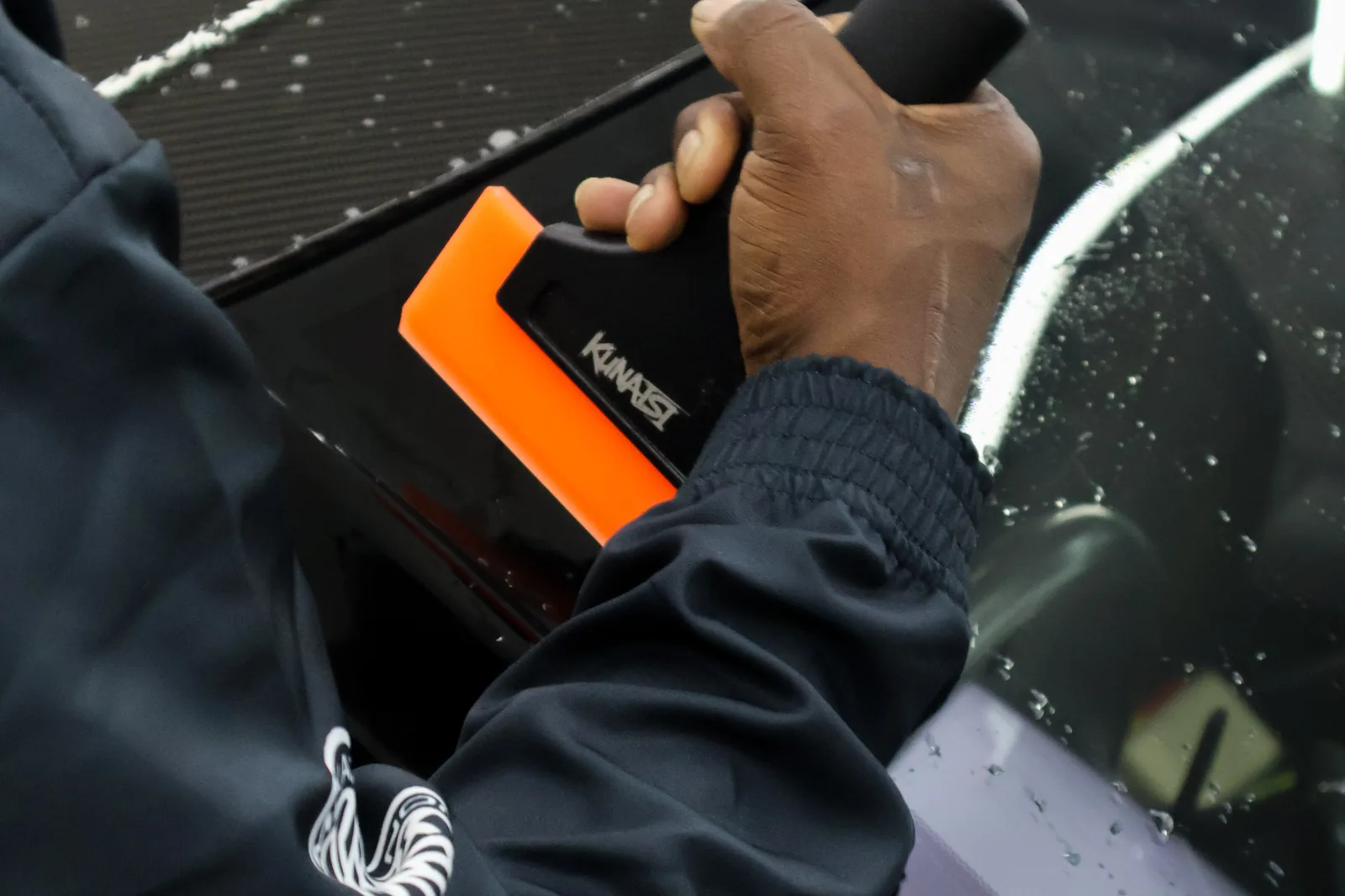
What is realistically unavoidable on complex panels
Some panels are simply harder than others. Deep curves, sharp recesses, tight trim, sensors and badge areas can make seams or controlled cuts necessary. That is not automatically a fault. The difference is whether the installer handled those choices deliberately. A quality installer should be able to explain why a seam was used, where the edge was placed and how the finish was documented.

How to evaluate a PPF installer during the inspection
Use the handover conversation to test process, not sales language. Ask how the car is measured, how contamination is controlled, how seams are decided, and how edges are finished on the specific panels that matter to you. Ask what happens around trim and sensors, and ask how they check for lifting or tension before release.
You should also ask what documentation and aftercare you will receive. Good documentation helps you understand what was done, where the limits were, and how to care for the film from collection onward. That matters because the earliest ownership period is when small issues are most likely to be noticed, corrected or made worse by poor handling.
If the answers stay generic, the process probably is too. If the installer can walk you through the work panel by panel, that is a better sign.
Compare the process and finish, not only the film name
PPF installation quality is about workmanship you can trust after collection, not promises that every panel will disappear completely. Compare how the installer prepares, measures, aligns, finishes edges and documents the job. Those details tell you far more than a product name alone. If you want to assess the work properly, book an inspection, ask about the process and look closely at the finish before you decide.
EXD works from the Hyde Park studio at 386 Jan Smuts Avenue, Johannesburg, and serves Sandton and surrounding areas. For PPF care guidance, PPF service, request a quote or book an inspection, compare the process and finish before you hand over the car.
Compare the workmanship before you commit
Arrange an inspection to discuss panel fit, edges and installation quality.
Make a booking