
.png)

Choosing between PPF vs ceramic coating usually begins with a simple question, but it quickly becomes more specific once the vehicle and the owner’s priorities are considered. A new purchase can create that moment of hesitation. Should the paint be protected against stone chips first, should the finish be easier to maintain, or should both concerns be addressed together? For premium owners in Johannesburg, that decision is rarely just about product names. It is about how the car is used, what the paint is expected to face, and how much value the finish holds over time.
The confusion is understandable because both options sit under the umbrella of car paint protection. Yet they protect in different ways and at different layers. One adds a physical barrier. The other improves the way the paint behaves at the surface. They can complement each other, but they do not perform the same job. A considered answer to paint protection film vs ceramic coating starts with the risk the vehicle actually faces. It should not start with the assumption that one solution can replace the other.
For owners thinking about luxury car protection, the practical question is usually not “Which one is better?” It is “What problem needs solving first?” That distinction matters on a daily-driven vehicle in Johannesburg traffic and on a fresh new car. It also matters on high-value paintwork where gloss, clarity and condition all matter.
They protect different things
Paint protection film, or PPF, is a transparent film applied over painted panels. Its job is physical protection. It acts as a sacrificial layer between the road and the paint, which is why it is often considered for exposed areas such as the front bumper, bonnet, mirrors and leading edges. Where the main concern is stone chips, debris, or light road impact, film is the more direct answer.
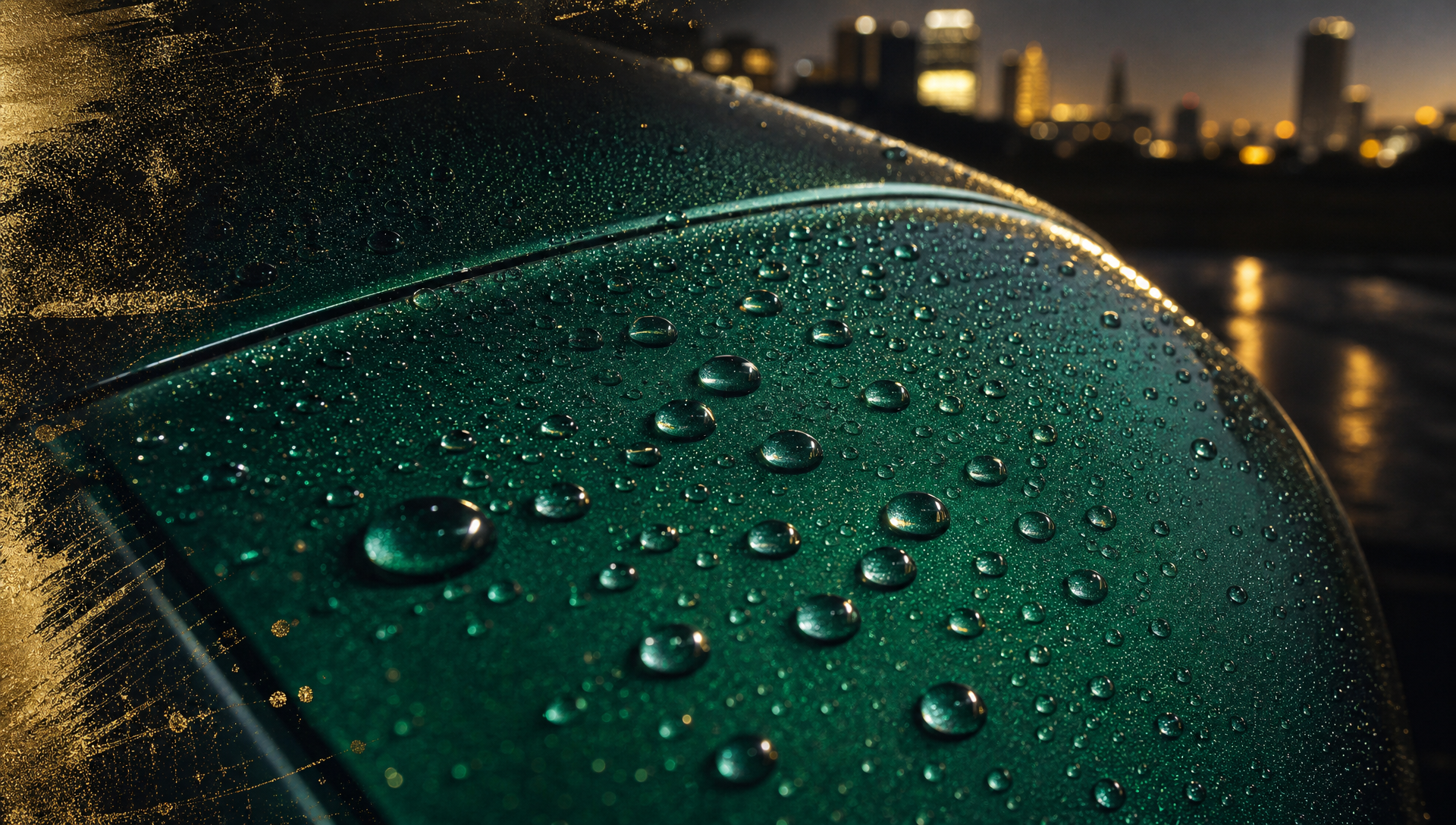
Ceramic coating works differently. It bonds to the clear coat and changes the surface behaviour of the paint. It is generally chosen to support gloss, slickness and easier cleaning. It can make dirt and wash residue less stubborn, but it is not a physical shield in the same sense as film. It does not offer the same kind of impact barrier, and it should not be treated as a substitute for stone-chip protection.
That is the core of the paint protection film vs ceramic coating comparison. PPF deals with impact and contact risk. Ceramic coating deals with surface behaviour and maintenance. If the vehicle needs both of those outcomes, the answer is often not either-or. It is to apply each solution where it makes sense.
In practice, this matters because premium vehicles are often judged by different standards than ordinary daily transport. A car can have excellent gloss but still be vulnerable to front-end wear. It can also be protected from routine contamination yet remain exposed to chips. Clear thinking about the job each product performs leads to better decisions and fewer false expectations.
What PPF does in real driving conditions
PPF is selected because it gives the paint a layer that can absorb the first line of exposure. For a vehicle driven in Johannesburg, that is especially relevant where traffic, open-road sections and loose debris create regular stone-chip risk. Owners who care about the front-end condition of a new vehicle often start here, since the bonnet, bumper and mirrors tend to receive the most direct abuse.
That said, PPF should be approached with realistic expectations. It is protective, not invincible. It does not make paint damage-proof, and it does not remove the need for proper care. The film itself can still be affected by poor installation, harsh treatment or damage that goes beyond normal road use. It is best understood as a strong layer of defence, not a promise that nothing will ever mark the surface.
In that sense, PPF is often most valuable when the question is, “Which areas are most exposed?” Some owners want selective coverage on the highest-risk panels. Others prefer broader coverage because they want a more complete protective approach. Both are valid depending on vehicle use, exposure and finish goals.
For a new-car owner, the appeal of film is usually preserving condition before wear becomes visible. Once chips and abrasion are present, they cannot be undone by adding protection later. That is why PPF is often considered early, especially on vehicles where the original paint condition matters and the front end sees regular road use.

What ceramic coating does and what it will not do
Ceramic coating is commonly chosen for the way it supports the finish rather than for impact defence. On well-prepared paint, it can improve the way the surface looks and feels, making washing easier and helping the vehicle stay cleaner for longer. For owners who value gloss and a refined, easier-care finish, that can be a significant benefit.
However, ceramic coating does not stop stone chips. It does not add the same physical layer as PPF, so it cannot be treated as a front-end solution for road impact. It also will not hide preparation issues. If the paint has swirls, haze or other visible defects, a coating will not correct them on its own. In some cases it can preserve those imperfections visually if the paint is not addressed first.
This is why ceramic coating is best viewed as a surface-support system rather than a replacement for film. It helps the paint behave better in day-to-day maintenance and can add a more polished look to the finished result, but it does not solve the same problem as PPF. Owners seeking car paint protection need to be clear about which concern matters most: impact resistance, finish quality, or both.
For some vehicles, coating alone is enough. For others, especially high-value daily drivers, it is only part of the plan. The right choice depends on how the car is used, how much the owner wants to simplify washing, and how important stone-chip protection is on the most exposed surfaces.
Why paint correction and preparation come first
Protection products work best on properly prepared paint. That is where paint correction fits into the process. Before any film or coating is applied, the paint should be inspected so the current condition is understood. If the surface already carries swirls, haze or other defects, those issues do not disappear simply because a protective layer is added on top.
Preparation matters for both products, but it is especially important with ceramic coating because the coating bonds to the finish it is given. If the underlying paint is not corrected first, the coating can lock in the appearance of those defects. With PPF, the same principle applies in a different way: the film sits over the paint, so any unresolved marks beneath it can remain visible.
A proper evaluation of paint condition and intended use is therefore the foundation of a premium result. That is the point at which the decision shifts from product preference to process. A clean, refined surface gives any protection system a better starting point, and it helps the final outcome look deliberate rather than merely covered.
This is especially important for luxury vehicles, where the quality of the paintwork is part of the ownership experience. When preparation is treated as the first step, the protection can support the finish instead of disguising a problem underneath it.
Questions that should guide the decision
Owners in Johannesburg usually make better decisions when they consider the car’s real use rather than choosing from a brochure-style comparison. A useful decision framework starts with a few practical questions.
How exposed is the vehicle to road impact?
If the car spends time in traffic, on open roads or in conditions where loose debris is common, the front end may benefit most from PPF. Stone chips are a physical problem, so physical protection is the more relevant answer.
Is gloss or cleanability the bigger priority?
If the owner wants the car to wash more easily and maintain a cleaner appearance between details, ceramic coating becomes more attractive. If the finish is meant to look refined and stay easier to manage, coating has a clear role.
How valuable is the paint condition itself?
On a new car or a carefully maintained high-value finish, preserving the existing condition can matter as much as protecting against future wear. That can justify more thoughtful coverage and stronger preparation.
Will the car be maintained personally or professionally?
If the owner wants easier washing and less effort in day-to-day care, coating may be a strong benefit. If the car will face more demanding use, film may be more important on the vulnerable panels.
Does the vehicle need targeted protection or broader coverage?
Some cars only need the highest-risk panels addressed. Others, especially premium vehicles, benefit from a more complete plan. The right choice depends on exposure and finish goals, not on a one-size-fits-all package.
These questions help separate emotional preference from practical use. That is often the difference between choosing a product because it sounds appealing and choosing a protection plan that actually matches the vehicle.
When a combined approach makes sense
For many owners, the most sensible answer is not PPF or ceramic coating in isolation, but a combination of both. Film can be applied to the most exposed impact zones, while coating can be used on the rest of the painted surfaces to support gloss and easier cleaning. That approach does not make either product redundant. It gives each one a clear role.
This is often the right direction for new car protection when the vehicle is valuable, driven regularly and expected to stay in strong cosmetic condition. The front of the car benefits from physical defence, while the broader bodywork benefits from a cleaner, more manageable surface. The result is a more complete car paint protection strategy without pretending that one product can do every job.
Executive Details approaches this kind of decision through the condition of the paint and the intended use of the vehicle. That process-led view is useful because it keeps the recommendation grounded in what the car actually needs. In some cases, the answer is film first. In others, it is coating first. In many cases, it is a combination that respects both impact risk and finish quality.
Choose the protection that matches the job
The clearest way to think about PPF vs ceramic coating is to start with the problem, not the product. If the main concern is stone chips and physical impact, paint protection film is the more direct layer. If the main concern is gloss, easier maintenance and a cleaner surface, ceramic coating is the more relevant choice. If both concerns matter, a combined approach is often the most sensible path.
For premium vehicles in Johannesburg, that decision is best made with a clear view of the paint, the driving environment and the result the owner wants to preserve. If the vehicle’s finish deserves a careful, low-pressure discussion about PPF, ceramic coating or a combination of both, speak with Executive Details and choose the protection plan that matches the car’s actual use.